When students and families think about elite colleges, they often focus on rankings, prestige, or admission rates. Yet some of America's most challenging colleges distinguish themselves not necessarily by selectivity, but by the intensity of the academic experience. While these colleges differ in terms of the type of academic environment they foster, each one demands exceptional intellectual curiosity, discipline, a genuine love of learning, and a commitment to academic focus that creates a workload and culture that may prove overwhelming for some students.
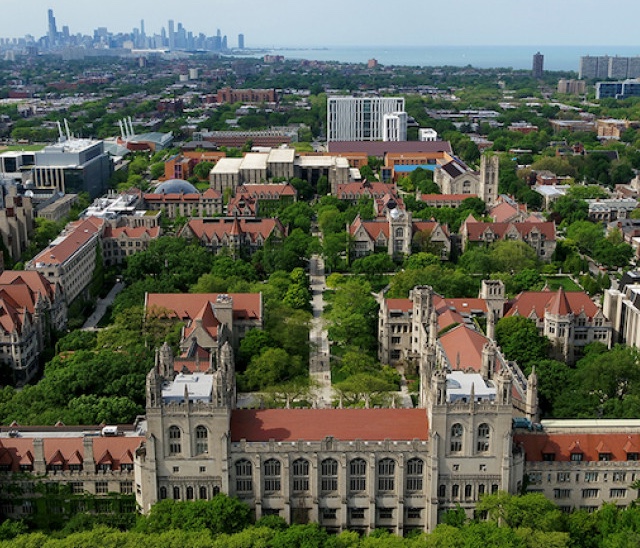
Among the most academically rigorous colleges in the United States is the University of Chicago. Famous for its commitment to intellectual inquiry and analytical thinking, Chicago attracts students who enjoy exploring complex ideas, debating challenging concepts, and engaging deeply with academic material. It is particularly well-suited for intellectually adventurous students who thrive on rigorous discussion and theoretical exploration. While some people refer to the University of Chicago as “The place where fun goes to die,” it does, in all fairness, also provide exceptional academic opportunities, and a robust cultural experience.
Reed College (Yes, really!) has long been known for its intense academic culture and emphasis on learning for its own sake. Students complete a substantial senior thesis and participate in conference-style classes that require active engagement and independent thinking. Reed is an excellent fit for Humanities Scholars, Research Superstars, and intellectually curious students who value scholarship more than prestige or career networking.
Swarthmore College combines the intimacy of a liberal arts college with the academic intensity often associated with major research universities. Swarthmore students are known for their seriousness, intellectual ambition, and commitment to academic excellence. The college is particularly well-suited for Academic Machines, Research Superstars, and students who enjoy collaborative but highly challenging environments.
Harvey Mudd College refers to itself as the country's only true "liberal arts engineering college." While that is somewhat debatable, it is widely considered one of the most demanding STEM institutions in the country. Its rigorous curriculum in mathematics, science, and engineering attracts students who possess exceptional quantitative abilities and a passion for solving difficult problems. Harvey Mudd is an ideal choice for future scientists, engineers, mathematicians, and technology innovators who welcome academic challenges.
The Massachusetts Institute of Technology (MIT) also ranks among the nation's most rigorous institutions. This should not surprise you. MIT students are expected to tackle complex scientific and technical problems while demonstrating creativity, resilience, and collaboration. The college is best suited for highly gifted STEM students who enjoy pushing the limits of their abilities. Some consider MIT to be the best business school in the country, though I believe that Wharton and Harvard might take issue with this characterization. It is not available that MIT graduates are among the most well paid recruits in the country along with graduates of Harvard and Harvey Mudd.
California Institute of Technology (Caltech) offers perhaps the most concentrated scientific and mathematical environment in higher education. The curriculum is extraordinarily demanding, and the student body is composed almost entirely of exceptionally talented STEM scholars. Caltech is an outstanding choice for students seeking the highest level of scientific and mathematical rigor. If you are considering Caltech, you should definitely visit the campus since, although it is gorgeous and sunny and full of palm trees, it is smaller than many high schools.
Princeton University, while offering a broader academic experience than some specialized institutions, is also known for its demanding coursework and required senior thesis. Princeton attracts highly motivated students across disciplines and is particularly well-suited for future scholars, researchers, and academic leaders.
Ultimately, academic rigor alone should not determine a student's college choice. The most important consideration is fit. A Humanities Scholar may flourish at Reed or Chicago, while a future engineer may thrive at MIT, Caltech, or Harvey Mudd. Students should seek institutions whose intellectual culture matches their interests, learning style, and aspirations. When rigor and fit align, the college experience can become truly transformative.